Solar and Battery Packages: What Is Included?
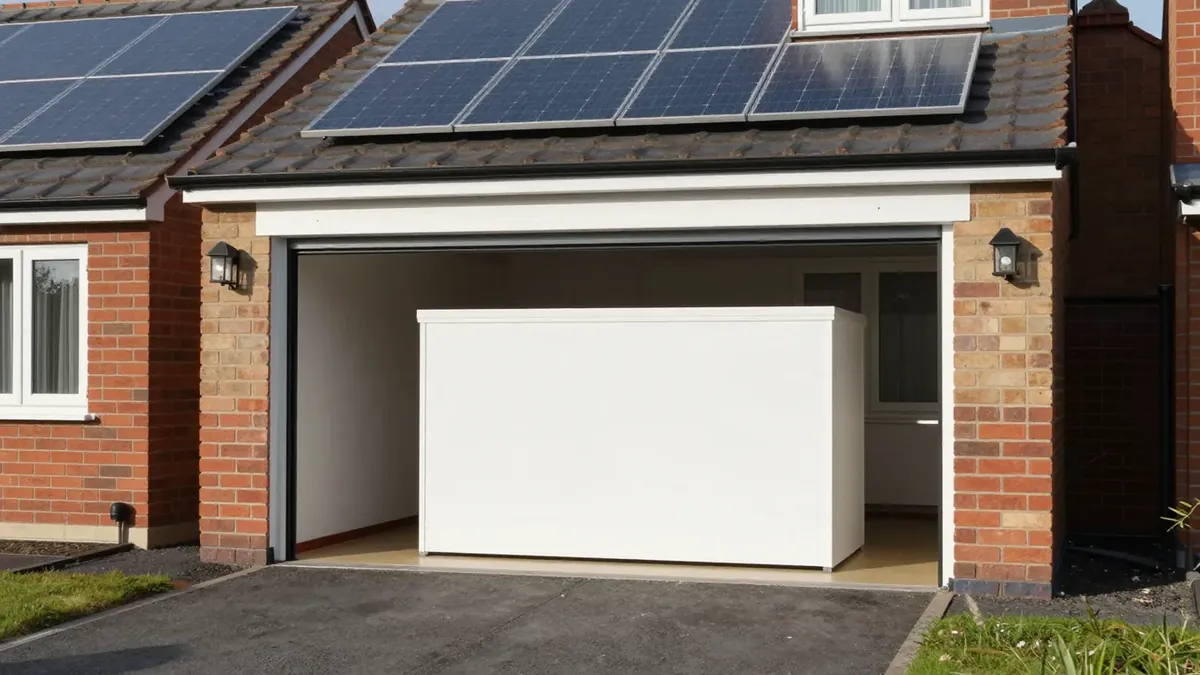
A solar and battery package is one quote that covers the panels, a hybrid inverter, a home battery, monitoring and the installation. It also covers the paperwork, such as the grid notification and the certificates. Because one firm handles the whole job, the parts should work together. The details differ between quotes, so compare them line by line.
What a package usually contains
Most packages share the same core list. Each item matters, because a gap in one line often shows up as a cost later. Use this table as a checklist.
| Item | What to look for |
|---|---|
| Solar panels | Panel make, model, number of panels and total kWp |
| Inverter | Hybrid type that links panels and battery, with the model named |
| Battery | Make, model and usable capacity in kWh |
| Mounting and cabling | Roof fixings, scaffolding and cable runs |
| Monitoring | An app or portal, and how the meter data reaches it |
| Installation and paperwork | MCS certificate, electrical certificate, grid notification |
Scaffolding is the item people forget. Some quotes include it, while others add it later. Therefore ask for it by name.
Why a hybrid inverter matters
The inverter turns the direct current from your panels into the alternating current your home uses. A hybrid inverter also manages the battery. Therefore one box can run both parts of the system.
Some packages use a separate battery inverter instead. That can work well, although it adds a second box and a second point of failure. Ask the installer why it chose its design, and ask what happens if one unit fails.
If you want to learn how the battery side works, read how home battery storage works. It covers charging, discharging and the daily cycle in plain terms. As a result, you can judge a quote with more confidence.
What a package costs
Costs vary a lot, so treat any single figure with care. Government data for 2025/26 gives a useful anchor, because it comes from real installs. The median installed cost was about £1,700 to £1,800 per kW. That is roughly £7,000 to £7,500 for a 4 kW system, before any battery.
Batteries add to that figure. We do not quote a battery price here, because the sources we trust do not agree closely enough. Typically a battery costs a few thousand pounds, depending on its size.
For a fuller breakdown, see what solar panels cost in the UK. Furthermore, treat any package price as the sum of its parts, and ask the installer to list each part.
Tax helps for now. Installing solar panels and home batteries is VAT-free (0%) until 31 March 2027. However, from 1 April 2027 the rate is due to revert to 5% under current legislation, according to HMRC.
How to compare two quotes like for like
Two packages with the same headline price can differ a great deal. A fair comparison therefore needs the same unit of measure on both sheets. Work through these steps in order.
- Write down the panel total in kWp and the battery capacity in usable kWh.
- Divide the price by the kWp, then compare the two results.
- Check that both quotes name the inverter, and that both include scaffolding.
- Confirm that both are MCS-certified and say who registers the installation.
- Compare warranty terms in writing for the panels, inverter and battery.
Step two is the one that exposes weak offers. A bigger array at a similar price usually means better value. However, a bigger array only helps if your roof and your usage can make use of it.
Sizing the battery to your home
A battery that is too small runs out by evening, while one that is too large sits half empty. Your daily use and your array size set the right middle point.
Our guide to sizing a solar battery shows the method step by step. In short, look at what you use after dark. Then match the battery to that figure, because the biggest model on offer is rarely the best fit.
It is also fair to ask whether a battery pays back for you. Are solar batteries worth it sets out the trade-offs without hype. Some homes gain a lot, while others gain little.
Brands and models
Package quotes often name a battery brand, and the brand affects both price and features. Compare like with like, such as the usable capacity and the stated warranty, since brands quote these in different ways. Our overview of the best solar batteries in the UK explains the main options.
Ask whether the installer chose the equipment for your home or to clear its stock. A good answer refers to your roof, your usage and your goals. A vague answer is a warning sign, because it suggests the choice came first.
What a package may leave out
Read the exclusions as closely as the inclusions, because they hide extra cost. A package may leave out an EV charger, a smart meter or any backup equipment. It may also leave out roof repairs found during the survey. Each gap can add a cost, so ask the installer to list them.
Payment terms matter too. RECC guidance says you should not pay more than 25% of the final contract price as a deposit. Therefore a request for half the money up front deserves a second look. Furthermore, ask which consumer code the installer follows.
Monitoring and control
Monitoring shows what your panels make, what the battery holds and what you send to the grid. That data helps you spot faults early. It also helps you change habits, for example by running the dishwasher at midday.
Check what the app shows. Also check whether it needs a subscription, because some do. In addition, a smart energy monitoring setup can track the grid import and export, so you can see the full picture.
Backup power in a power cut
Many solar and battery systems switch off during a power cut. Backup power is an extra feature. Ask the installer whether the quoted system includes it, and what it would run.
Do not assume a battery means backup, because the two are separate features. Get the answer in writing, and check the cost of any extra equipment.
Local differences that change the quote
Your home and your area can change the job. In Liverpool, 37.9% of households live in terraced homes, according to the 2021 Census. The council also reports 36 conservation areas, and Article 4 directions cover most of them.
As a result, a quote for solar and battery packages in Liverpool should show that the installer checked the planning position.
Nottingham has a higher share of detached homes, at 15.6%. That can leave room for a larger array. Our page on battery installers serving Nottingham is a good place to start.
Leicester has 36.4% semi-detached homes, and the city has conservation areas such as Stoneygate. For that reason, see solar and battery quotes in Leicester before you choose a design.
In Coventry, 39.9% of households live in terraced homes, and Earlsdon is a conservation area. Similarly, terraces mean shared roof lines and tighter access. You can read about solar panel and battery installers in Coventry for the local picture.
How to start
Ask for at least two package quotes, and check that each is MCS-certified. Our solar and battery bundles page explains what a matched package involves. Meanwhile, the solar panel installation page covers the roof side in more detail.
The certificate check is quick, and what MCS certified means for solar walks through it. Do it before you pay a deposit, because it is easier to walk away early.
Solar Base Energy is a free matching service, and we do not install anything. You send one form, and we match you with an MCS-certified installer who serves your area. You then compare the quotes and choose.
Sources
Frequently asked questions
Is a solar and battery package cheaper than buying the parts separately? +
Often it is, because one visit covers the roof work, the wiring and the commissioning. A bundle can also avoid mismatched equipment. Compare the full itemised price rather than the headline total.
Do solar and battery packages include VAT? +
Installing solar panels and home batteries is currently VAT-free (0%) until 31 March 2027. From 1 April 2027 the rate is due to revert to 5% under current legislation. Check that your quote states which rate it applies.
Will a package keep my home powered in a power cut? +
Not always. Many solar and battery systems switch off during a power cut. Backup power is an extra feature, so ask your installer whether the system you are quoted includes it.
Does a package need to be MCS certified? +
Yes, if you want to claim Smart Export Guarantee payments. The installation must be MCS-certified, and you also need a smart meter or other half-hourly export meter.