Are Solar Batteries Worth It in the UK?
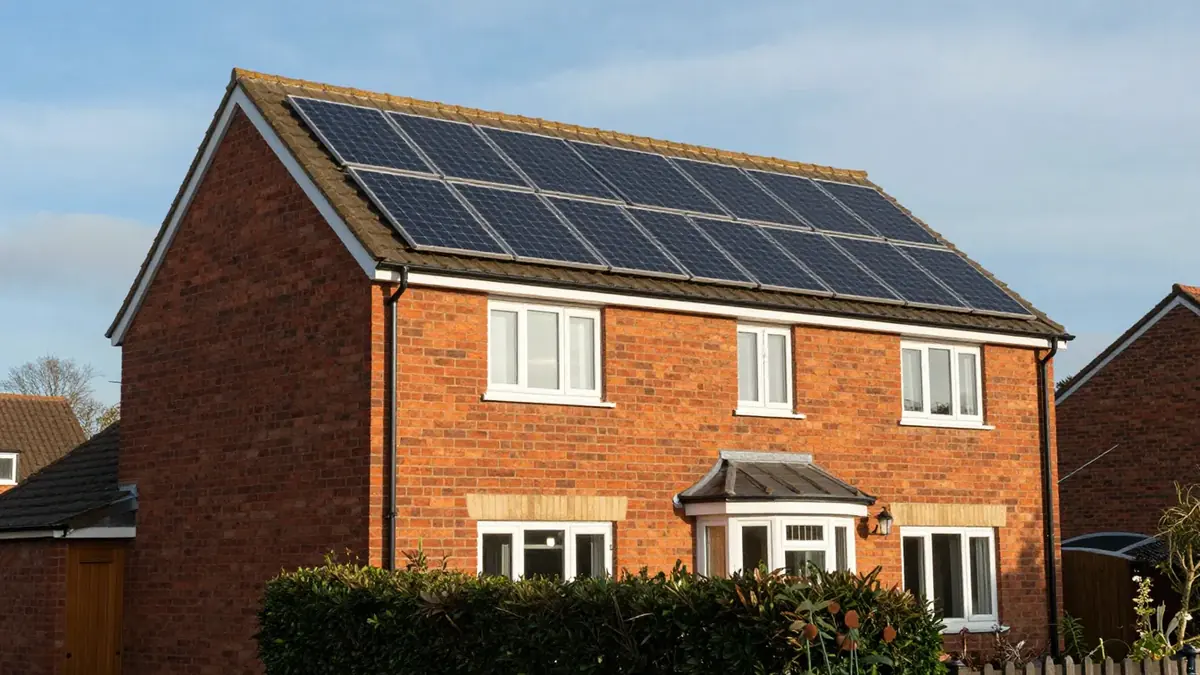
Solar batteries are worth it for some homes and not for others. They tend to pay off where evening electricity use is high and a time-of-use tariff is available. However, a low-use household may find the savings too small to cover the cost.
What makes a battery worth the money
A battery does one job, since it stores cheap or free electricity and releases it when power costs more.
Because of this, its value depends on the gap between two prices. One is what you pay to import power at peak times. The other is what you would get by exporting the same power, or what you pay overnight.
From 1 October to 31 December 2026, the Ofgem price cap averages about 26p per kWh for electricity. In contrast, Octopus’s open Smart Export Guarantee tariff paid 4.1p per kWh in October 2026. That gap of roughly 22p is why storing spare solar can make sense.
Who is most likely to gain
Some households have a clear case because they share a few features. These features make a battery work harder.
- High evening use. Cooking, heating and screens after dark create demand to meet.
- Panels on the roof. Free midday power fills the battery, so you import less.
- A smart tariff. A cheap overnight rate lets the battery charge from the grid.
- An electric vehicle. A home with an EV has more energy to shift.
Our guide to Octopus battery storage and smart tariffs shows how these tariffs pair with a battery. Furthermore, our smart tariff optimisation service page explains the options in plain terms.
What changes the saving through the year
Savings are not steady across the year. In summer, long days fill the battery early, so it may be full by midday. As a result, extra solar is exported at a low rate.
In winter, the opposite happens. Short days leave little spare solar, although evening demand is high. Therefore a battery may charge from the grid on a cheap overnight rate instead.
This is why a time-of-use tariff matters so much. Intelligent Octopus Go, for instance, charges 7.6p per kWh overnight for eligible EVs and chargers, as of October 2026. Compared with the 26p cap average, that overnight rate leaves a wide gap to exploit.
Furthermore, your own habits shape the result. Running a dishwasher after dark uses stored power, while running it at noon uses solar directly. Both are fine, yet the battery only adds value for the evening share.
Who may not gain much
Other homes have a weaker case. That does not mean a battery is a bad product, but the sums are harder to make work.
If you are out all day and use little power at night, there is less to store. Similarly, a small solar array may leave no spare power to bank. In both cases the battery sits idle for much of the year.
Moreover, a bigger battery is not always better. An oversized unit never fills, so the extra cost earns nothing. Match the size to your evening use instead.
A simple way to test break-even
You can test the case yourself because the method has only two steps. It needs no special tools.
First, estimate the kWh you would shift each year, meaning power you would store and use later. Second, multiply that by the price gap, because the gap is what each shifted kWh saves. The result is your yearly saving, so divide the net cost of the battery by it to get the break-even time.
The table below shows the arithmetic only, since real gaps differ. It uses a gap of about 22p, taken from the two rates above. These are illustrations of the method, not forecasts for your home.
| kWh shifted per year | Gap of about 22p per kWh | Yearly saving |
|---|---|---|
| 1,000 | 1,000 × £0.22 | about £220 |
| 1,500 | 1,500 × £0.22 | about £330 |
| 2,000 | 2,000 × £0.22 | about £440 |
Rates change each quarter, therefore rerun the sums when your tariff changes. Our guide to solar battery cost explains what goes into the cost side. In addition, our solar panel payback guide covers the panel side of the maths.
How export payments change the sums
The Smart Export Guarantee pays you for surplus solar sent to the grid. Each supplier sets its own rate, although it must be above zero. Therefore rates vary a lot.
For example, in October 2026 Octopus’s open tariff paid 4.1p per kWh and British Gas’s non-customer tariff paid 3p per kWh. Some suppliers pay more to their own import customers. Check current rates before you choose.
Specifically, to claim payments your system must be MCS-certified and you need a smart meter or another half-hourly export meter. A battery changes when and how much you export. Read our guide to the Smart Export Guarantee with a home battery for the detail.
VAT, grants and timing
VAT is a timing issue right now because the rate is due to change. Home batteries, including ones fitted without solar, are VAT-free (0%) until 31 March 2027. From 1 April 2027 the rate is due to revert to 5% under current legislation.
Grants are narrower than many people expect. For example, Home Energy Scotland stopped funding standard solar panels and batteries in June 2024. Its grant and loan now centre on heat pumps and insulation.
In England, however, low-income households in lower-rated homes may qualify for the Warm Homes: Local Grant through their council. It is not a route to a free system for most homeowners, so do not plan around it.
Backup power and peace of mind
Some people buy a battery for security, not savings. That is a fair reason, although it changes the sums.
Many solar and battery systems switch off during a power cut. Backup is an extra feature, so ask your installer whether the system you are quoted includes it. As a result, check this before you pay.
Since backup may be your main goal, read our guide to off-grid solar battery backup. It explains what each type of set-up keeps running.
How location changes the answer
Sunshine varies across the UK, so a battery fills at different speeds. The PVGIS modelling tool from the EU Joint Research Centre estimates yield for a 4 kWp array. These are estimates for a south-facing roof at 35 degrees, not promises.
In Manchester the figure is about 3,544 kWh a year, although this is the lowest of the English cities we checked. Flats make up 34.6% of households, so building-level permission can matter. See our page on solar battery installers in Manchester.
Liverpool is modelled at about 3,860 kWh a year. Terraced homes are 37.9% of households, while only 8.2% are detached. Our page for solar panel installers serving Liverpool covers the local roof types.
Nottingham comes out at about 3,880 kWh a year. In contrast to Manchester, detached homes are 15.6% of households there, which leaves more roof room for a larger array. Read about solar and battery installation in Nottingham.
Edinburgh is modelled at about 3,611 kWh a year, while about 56% of households live in flats (council census summary). For those homes, see our page on solar panels and batteries in Edinburgh.
Our verdict
A battery is worth it when you can use what it stores. If, for example, your evenings are busy and your tariff rewards smart charging, the case is strong. If not, the money may be better spent elsewhere.
Therefore, run the sums with real quotes before you decide. Compare at least two, and ask each installer to show the battery size, the usable kWh and the inverter. Our home battery storage service page explains what to prepare.
Solar Base Energy is a free matching service, and we do not install batteries ourselves. Tell us about your home through the quote form, and we match you with an MCS-certified installer for a free, no-obligation quote.
Sources
Frequently asked questions
Are solar batteries worth it for a small household? +
Often less so, because a battery earns money by storing power you would otherwise export cheaply. If your evening use is low, there is less to shift, so the case is weaker.
Do I need solar panels to benefit from a battery? +
No, because a battery can charge from the grid on a cheap overnight tariff. However, panels give it free power to store, which usually improves the case.
Will a battery protect me in a power cut? +
Many solar and battery systems switch off during a power cut. Backup is an extra feature, so ask your installer whether the system you are quoted includes it.
How do I work out my own break-even? +
Divide the net cost of the battery by the yearly saving. The saving is the kWh you shift each year multiplied by the gap between your import price and the price you would otherwise get.