Off-Grid Solar Battery Backup for UK Homes
Off-grid solar battery backup keeps chosen circuits running when the grid goes down. Because we are a matching service, we pair you with an MCS-certified installer who can design it.
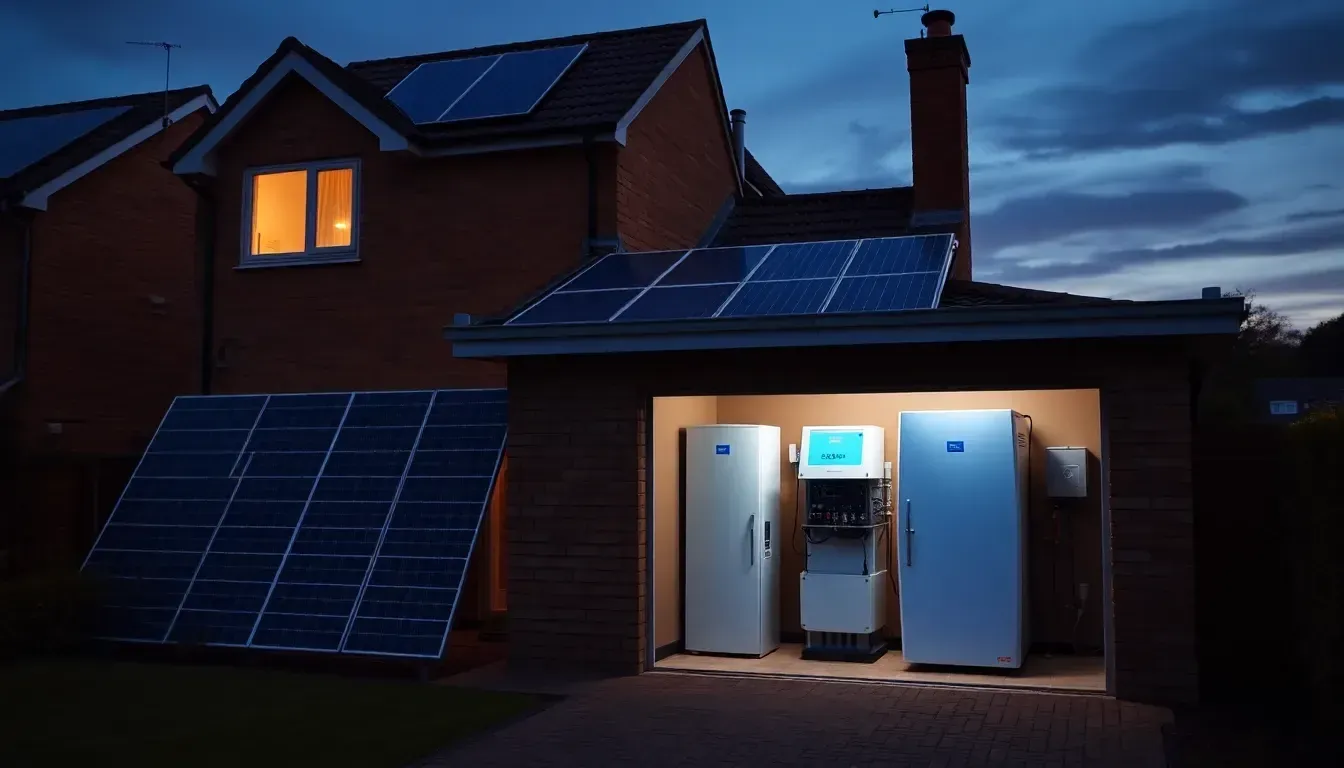
Backup, off-grid and grid-tied: what the terms mean
Most UK solar systems are grid-tied, so they switch off when the grid fails. Backup is different, because it lets a battery keep chosen circuits live during a power cut. Off-grid means no grid connection at all, which is rare for a UK house.
Many battery systems give no backup unless the installer designs for it. However, the result depends on the inverter and the wiring. Therefore say you want backup when you ask for quotes.
Our off-grid solar battery backup guide covers the options in depth. Meanwhile, this page focuses on how to specify and buy it.
How power-cut backup works
A backup-capable system detects the outage and isolates your home from the grid. As a result, your home runs on stored power. The battery and inverter then feed a set of circuits, often called essential circuits. Our guide on how home battery storage works covers the basics behind this.
Your installer wires those circuits to a separate board. For example, typical choices include lighting, the fridge, the boiler controls and internet. Large loads such as electric showers usually stay off that board.
Who needs backup, and who does not
Backup suits households that rely on power for medical devices, home working or a freezer full of food. It also suits homes in areas with frequent outages. In contrast, a home with short, rare cuts may not need the extra cost.
A full off-grid home needs a much larger system and a plan for long dark spells. The EU's PVGIS tool models a 4 kWp array at about 3,410 kWh a year in Glasgow and 4,488 kWh in Plymouth. Because output drops in winter, a battery in the north refills more slowly.
Choosing which circuits to back up
Start by listing what you cannot do without. Examples are lighting, the fridge and the router. Furthermore, add any medical device or home office.
Each circuit you add raises the load on the battery. As a result, the battery drains faster. Therefore a shorter list gives a longer run time.
Your installer can estimate the run time from the battery's usable capacity and your chosen loads. Ask for that figure in your quote. If it is missing, ask why, since it shapes your choice.
Some setups can recharge the battery from the panels in daylight during an outage, while others cannot. Because designs differ, ask which one the quote covers. Without solar recharge, the battery stays flat until the grid returns.
What backup costs
We cannot quote a verified price for backup, because it depends on the inverter, the battery and the extra wiring. Backup-ready equipment and a second consumer unit can add cost to a standard install. The quote should show that cost as a separate line.
For context, Which? reported in August 2026 that Ovo advertises batteries from around £2,500 and EDF Energy from £3,995. Installing a home battery is also VAT-free at 0% until 31 March 2027. From 1 April 2027 the rate is due to revert to 5% under current legislation.
Safety rules and standards
Battery siting follows PAS 63100, a BSI specification for fire protection in homes. Specifically, it points to outdoors or a garage where practical, and keeps batteries out of bedrooms and escape routes. It also sets a limit of 40 kWh of stored energy in most indoor locations.
MCS installers work to MIS 3012 for home batteries. Electrical work must also meet building regulations, and a registered installer normally handles the paperwork. Scotland uses building warrants, therefore ask early.
Read our guide to MCS-certified installations because it shows why this matters. The MCS certified installers guide explains how to check an installer.
What a backup quote should list
A backup quote should say which circuits the battery will power. Additionally, it should name the inverter and confirm that it supports backup mode. It should also give the battery's usable capacity in kWh.
- The list of backed-up circuits and the expected run time.
- Whether the system switches automatically when the grid fails.
- Where the battery will sit and how it meets PAS 63100.
- The warranty terms and the payment schedule.
Compare at least three quotes on the same basis. Meanwhile, installers who are RECC members follow a code that says deposits should be no more than 25% of the contract price.
Adding backup to an existing system
You may be able to add backup to existing solar and storage. However, it depends on whether your inverter supports it. Specifically, you may also need a separate board for essential circuits.
Our page on home battery storage covers the wider picture. If you want to track the system, see smart energy monitoring. Meanwhile, solar and battery bundles cover a full new system.
Testing backup at handover
Ask the installer to test backup mode before they leave. Specifically, request a demonstration with the grid supply switched off. Furthermore, keep the commissioning paperwork safe.
A tested system shows that the right circuits stay live, so you can rely on it. It also gives you a record to show the installer if a fault appears later.
Where we arrange backup installs
We arrange installs UK-wide. For example, see our pages on battery backup installers serving Glasgow, solar and battery options in Newcastle and home batteries in Plymouth.
Solar Base Energy is a free matching service, although we do not install systems ourselves. We match you with an MCS-certified installer who can quote for your home.
Rules and planning
In Scotland, panels on a house are generally permitted development, but not on listed buildings or in World Heritage Sites. Conservation areas have extra limits, and a building warrant may still apply. In Wales, most house roofs can take panels without planning permission, while flats, listed buildings and conservation areas need a council check.
Planning rules depend on where you live and what you fit. In England, most rooftop solar on houses does not need planning permission, although listed buildings need consent. Ask your installer or council about the battery unit itself.
Sources
Frequently asked questions
What happens to a home battery in a power cut? +
It depends on the setup. A system designed for backup keeps chosen circuits running, while many standard installs shut down. Ask your installer to confirm backup in writing.
Can a solar battery run my house off-grid? +
Full off-grid living needs a much larger system and a plan for long dark spells. Therefore most UK homes stay grid-tied and add backup for key circuits instead. Our off-grid backup guide explains the difference.
Will my battery power the whole house? +
Usually only the essential circuits you choose. However, large loads such as electric showers normally stay off the backup board. Your installer will agree the list with you.
Can I add backup to my existing solar and battery? +
Sometimes. It depends on whether your inverter supports backup, because a separate board may also be needed. An MCS-certified installer can check this.
Get a backup battery quote
Tell us which circuits matter most and what you have installed now. Because the service is free, you can compare the quote with others.
Get Your Free Quote