How Home Battery Storage Works
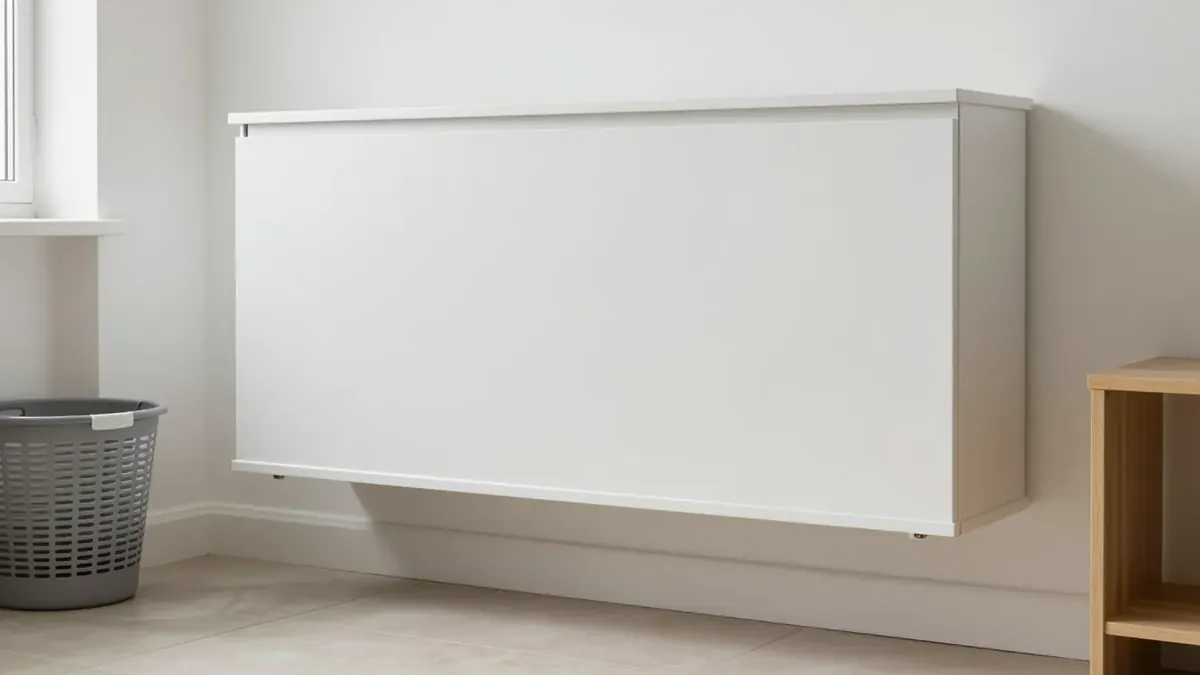
Home battery storage saves spare electricity so you can use it later. It charges from your solar panels, or from the grid when power is cheap, and it discharges when the house needs it. Because most batteries run on their own, you rarely have to touch one.
The three steps: charge, store, discharge
A home battery is a box of rechargeable cells with a control system. It does three jobs, because it must charge, hold the energy and give it back.
Charging happens when there is more power coming in than the house needs. The source is usually your solar panels. Since a battery can also charge from the grid, it may fill overnight on a cheap tariff.
Storage is passive. The cells hold the energy until a demand appears. However, some energy turns to heat each time it goes in and out. You never get back all of it.
Discharging starts when the house draws more than the panels make. The battery covers the gap, therefore you buy less from the grid. When the cells run low, the grid takes over again, and you will not notice.
A worked day in the life of a battery
Here is an example day for a house with panels and a small battery. The figures are assumptions for illustration, not a forecast. Your own day will differ, because the season, the weather and your habits all matter.
| Time | What the house does | What the battery does |
|---|---|---|
| 07:00 | Kettle, toaster, lights on | Empty or low, so the grid supplies most power |
| 10:00 | Panels make more than the house uses | Starts charging from the surplus |
| 13:00 | Peak sun, washing machine running | Charges fast while the house runs on solar |
| 16:00 | Panels fade, cooking starts | Full, so surplus is exported if you have a tariff |
| 19:00 | Oven, TV, lights all on | Discharges to cover most of the demand |
| 23:00 | House quiet | Nearly empty, ready to refill tomorrow |
The key point is the shift in time. Without a battery, the surplus from 10:00 to 16:00 goes to the grid. In contrast, with one, a share of it covers your 19:00 demand instead.
Where the inverter fits in
Solar panels and batteries both work in direct current, but the house uses alternating current. An inverter converts between the two. Therefore the inverter decides how the system behaves.
A hybrid inverter manages panels and battery together. In contrast, an AC-coupled battery brings its own inverter and sits beside the solar one. Our guide to solar inverters explains the types in more detail.
The inverter also sets how fast the battery can charge and discharge. A big battery behind a small inverter will empty slowly. Ask for both numbers, because the capacity alone does not tell you how well it will cope with a busy evening.
Charging from the grid
A battery does not need solar to be useful, since it can fill from the grid when electricity is cheap. It then supplies the house when power is dear. This is the idea behind time-of-use tariffs.
For example, Intelligent Octopus Go listed a cheap rate of 7.6p per kWh in October 2026, for eligible EVs and chargers. By contrast, the Ofgem price cap from 1 October to 31 December 2026 averages about 26p per kWh for electricity. A wide gap like this is what makes a battery worth considering.
However, tariffs change a lot, and not all tariffs suit all batteries. Our guide to Octopus battery storage tariffs looks at the options in detail. Our page on smart energy monitoring shows how an app helps you track what the battery does each day.
Exporting surplus to the grid
Once the battery is full, spare solar power can go to the grid. Under the Smart Export Guarantee, energy suppliers pay you for that exported power, although each rate differs. Each supplier sets its own rate, and it has to be above 0p.
Rates vary a lot. In October 2026, Octopus’s open SEG tariff paid 4.1p per kWh, while British Gas’s non-customer tariff paid 3p. Some suppliers pay more to their own import customers. Check current rates before you choose.
To claim, your system must be MCS-certified and you need a smart meter. Consequently, confirm that your installer holds MCS certification before you sign.
What happens in a power cut
Many solar and battery systems switch off during a power cut. This surprises many owners because a battery does not give backup power by default.
Backup is an extra feature. It needs equipment that can run the house on its own while the grid is down. Therefore, ask your installer whether the quote includes it, and which circuits it would keep running.
If backup matters to you, say so at the start, since it changes the design. Our page on off-grid and backup systems sets out the options. Our guide to off-grid solar battery backup goes into more detail.
Usable capacity and settings that matter
Makers quote battery capacity in kilowatt-hours (kWh). However, the usable figure is what counts, because a battery keeps a small reserve it will not use. Therefore compare usable capacity across quotes, not the headline number.
Most systems also offer modes. A self-use mode keeps the battery for the house and is the usual default. Another mode charges from the grid on cheap hours, while a backup mode holds some charge in reserve for a cut.
You can change settings later, often from a phone app. As a result, a good installer will explain each mode at handover. Ask them to show you the app, because it tells you what your battery does each day.
Choosing between the common set-ups
Most homes meet three set-ups, so compare them. A new solar and battery system uses one hybrid inverter and keeps the wiring tidy. A retrofit adds a battery to panels you already own, often with its own inverter. A battery-only system charges from the grid and suits a house without a suitable roof.
Each has trade-offs, and none is best for all homes. For example, a battery-only system gives no free solar energy, yet it can still save money on a time-of-use tariff. Our service page on battery storage compares them side by side.
Sizing, safety and cost
Size comes down to how much you use after the sun goes down, so start there. Our guide to choosing a battery size walks through the method. Products differ too, and our look at the Tesla Powerwall 3 in the UK shows how one popular option compares.
Safety matters because the cells store a lot of energy. A BSI specification, PAS 63100, covers where to site a battery. It prefers outdoors or a garage where practicable, while bedrooms and escape routes are best avoided.
Home batteries, including ones fitted on their own, are VAT-free (0%) until 31 March 2027. However, that is a time-limited relief. From 1 April 2027 the rate is due to revert to 5%. The cost of the battery itself is typically a few thousand pounds, but it varies with size, so compare written quotes.
How it plays out in four cities
Housing and sun differ across the country. In London, 54.0% of households live in flats and only 6.1% in detached homes, according to the 2021 Census. As a result, many Londoners must check who controls the roof or the plant room. Our page on home battery installers in London explains how we match you.
Birmingham is mostly houses, with semi-detached homes at 35.6% of households. The EU’s PVGIS tool models about 3,872 kWh a year there from a 4 kWp south-facing array. Our page for battery storage in Birmingham has more local detail.
In Glasgow, about 73% of dwellings are flats, according to Glasgow City Council data from 2020. Most are tenements, so shared ownership is the first hurdle. PVGIS puts the same 4 kWp array at about 3,410 kWh a year. Also, Home Energy Scotland no longer funds standard solar panels or batteries, so see our guide to solar battery installers in Glasgow.
Newcastle has 32.3% flats and a PVGIS figure of about 3,793 kWh a year. Its 12 conservation areas include Jesmond Dene. Our page on battery installers in Newcastle covers what to check.
Finding an installer
Choose an installer certified for batteries as well as panels, because the standards differ. MCS covers home batteries under its MIS 3012 standard. Ask for a written quote that lists the usable capacity, the inverter and any backup.
Solar Base Energy is a free matching service, not an installer. We match you with an MCS-certified installer after you send one short form. You can read more about our battery storage service before you start.
Sources
- Octopus Energy — Intelligent Octopus Go
- Ofgem — Changes to the energy price cap, 1 October to 31 December 2026
- GOV.UK — Smart Export Guarantee
- MCS — Update on PAS 63100 and the IET Code of Practice
- HMRC — VAT on energy-saving materials and heating equipment (Notice 708/6)
- ONS Census 2021 — Accommodation type (TS044) via NOMIS
Frequently asked questions
How does a home battery charge? +
It charges from spare solar power during the day. It can also charge from the grid when electricity is cheap, if your tariff and settings allow it.
Will a home battery work in a power cut? +
Many solar and battery systems switch off during a power cut. Backup power is an extra feature, so ask your installer whether the system you are quoted includes it.
Can a home battery charge from the grid? +
Yes, many can. Time-of-use tariffs such as Intelligent Octopus Go charge much less overnight, and a battery can fill then and supply the house later.
Do I need solar panels to have a home battery? +
No. A battery can charge from the grid alone, and batteries fitted on their own are VAT-free (0%) until 31 March 2027. Pairing one with solar usually gives more to store.