What Does MCS Certified Mean for Solar?
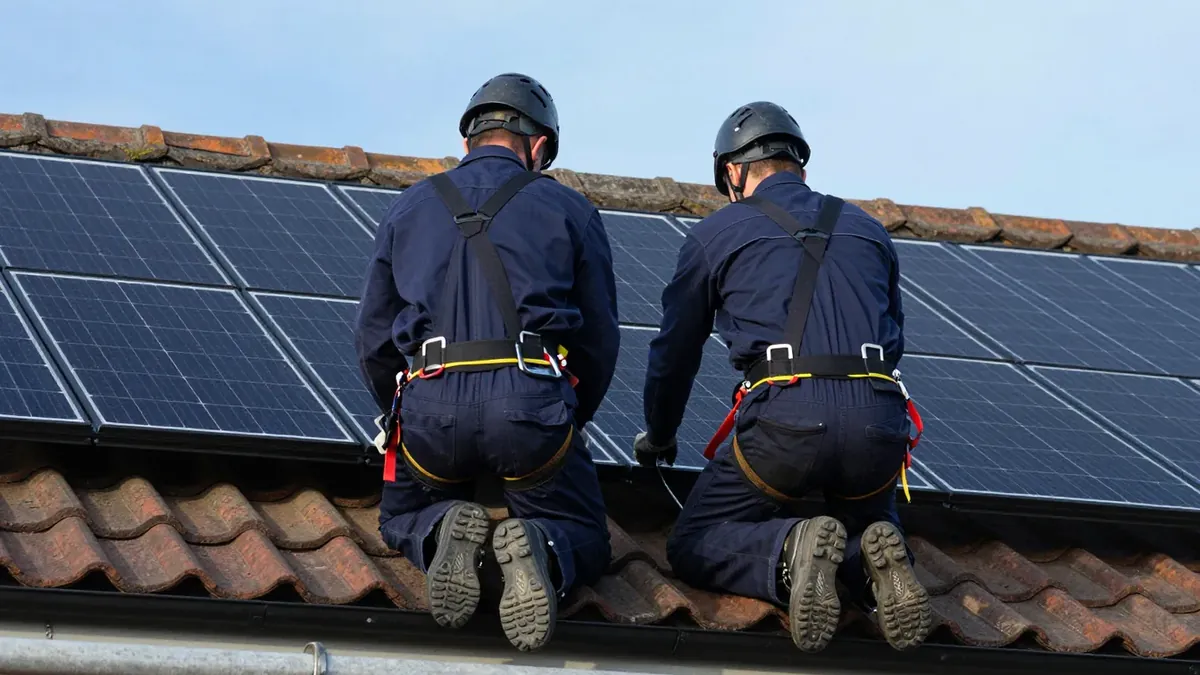
MCS stands for the Microgeneration Certification Scheme. It is the UK quality mark for small-scale renewable installers and the equipment they fit. For solar, it matters because you need an MCS-certified system to earn Smart Export Guarantee payments. MCS certified solar installers also work to published standards.
What MCS certifies
MCS covers both people and products. It assesses the installing company, and it also assesses the panels, inverters and batteries that company fits. According to MCS, the scheme applies to solar panels, battery storage and heat pumps.
The standards are public. Solar panel installations follow MIS 3002, and home batteries follow MIS 3012. Therefore a certified company has a written method for how it designs, installs and hands over a job.
For a homeowner, this gives you a fixed yardstick. Two quotes can look similar, yet only one company may follow the standard. The certificate lets you tell them apart.
Why the Smart Export Guarantee needs MCS
The Smart Export Guarantee, or SEG, pays you for surplus solar power. Suppliers set their own rates, but each rate has to stay above zero. Because the rates differ, it pays to compare tariffs.
To claim, GOV.UK says the installation needs MCS certification. You also need a meter that records half-hourly export, which is usually a smart meter. In addition, the scheme covers Great Britain only.
This is the practical reason to check the certificate. An uncertified system may still produce power, but you could not sell the surplus. For a house with a big array and a low daytime demand, that is a real loss.
MCS, RECC and building rules
People often mix up the schemes. Each one answers a different question, so it helps to separate them.
| Scheme | What it covers | Why it matters to you |
|---|---|---|
| MCS | Installer and product quality, installation standards | Needed for the SEG and many grants |
| RECC | A consumer code on selling and complaints | Deposit and complaint protection |
| Building regulations | Electrical safety in the home | Certificates for your records |
RECC advises that a company should not ask for more than 25% of the contract price as a deposit. That protection comes from the consumer code, not from MCS. As a result, the strongest installers show both.
What a certified quote should show
A good quote makes the certification easy to see. Look for the company’s MCS certificate number and the technologies it holds. A firm certified for heat pumps only is not necessarily certified for solar.
The quote should also name the panel and inverter models. For a combined system, it should name the battery and say where it will sit. Meanwhile, installers follow PAS 63100 for battery siting. It advises outdoor siting where practicable, and it rules out bedrooms and escape routes.
Finally, ask who handles the paperwork. A registered installer normally tells your network operator and gives you the electrical certificates. If a quote is vague on these points, press for detail before you sign.
How to check an MCS certificate
You can check an installer in a few minutes. Follow these steps, in this order.
- Search for the company name on the MCS website, which lists certified installers.
- Confirm the listing includes solar panels, and batteries if you want one.
- Ask for the certificate number on the quote and compare it with the listing.
- Check that the name on the quote matches the certified company.
The last step catches a common trap. A sales firm may borrow the name of a certified installer, yet send a different crew. If the names differ, ask who will do the work and who holds the certificate.
Questions to ask before you sign
A certificate is a starting point, not the whole answer. Once a company passes the check, probe the detail of the offer. Good installers expect these questions and answer them in writing.
- Which MCS standard covers each part of the job?
- Who is the named contact if a fault appears after the install?
- What are the product and performance warranty terms for the panels, inverter and battery?
- Is my deposit protected, and which consumer code do you follow?
Warranty terms differ a lot between brands, so get the figures on paper. We do not quote warranty lengths here, because they vary by product. In contrast, the certificate number is a simple, fixed fact you can verify in minutes.
Grants and MCS
Grant schemes often lean on MCS, so the certificate can matter beyond the SEG. In England, the Warm Homes: Local Grant needs installers who are TrustMark registered and certified under PAS 2030 or MCS. That grant targets low-income households in lower-rated homes, so it will not suit most owners.
The Boiler Upgrade Scheme also needs MCS, but it pays for heat pumps and biomass boilers. It does not fund solar panels or batteries. Consequently, do not plan a solar purchase around it.
Local schemes vary, and the details change often. In Sheffield, for example, the council has run Warm Homes Sheffield for eligible owners and landlords. Cardiff residents may ask Nest about help for low-income homes. Check each scheme’s own page for current rules, since we cannot promise availability.
What MCS does not guarantee
MCS is a strong signal, but it is not a promise of the best price. A certified firm can still quote high, so you should compare at least two offers. Although the standard sets the method, it does not set the margin.
Likewise, MCS does not settle planning questions for you. In England, most rooftop solar on houses and flats is permitted development, and the rules changed on 27 August 2026. Listed buildings always need consent, and wall-mounted panels facing the street face limits in conservation areas. Your installer should confirm the position for your home.
Why your address still matters
Local housing shapes what a good installer checks. In Manchester, only 5.4% of households live in detached homes, according to the 2021 Census. Another 34.6% live in flats. Therefore roof access and building permission often decide the job.
Sheffield, in contrast, has 38.0% semi-detached homes, which often suit simple pitched-roof arrays. Whichever type you own, the same certificate check applies, because the standard does not change with the house.
Conservation areas add another layer. Sheffield Council lists 38, including three run by neighbouring authorities, and Cardiff has 27. Plymouth has 15, including the Hoe and the Barbican. Because each area has its own rules, a certified installer should check before it designs the system.
How our matching uses MCS
Solar Base Energy is a free matching service. We do not install anything ourselves. When you send the quote form, we match you with an MCS-certified installer who serves your area.
You still have the final say. Compare the quotes, check the certificate number, and ask about warranty terms in writing. Moreover, if something is unclear, ask the installer to explain it before you commit.
Where you live can also shape the job. A Victorian terrace in a conservation area raises different questions from a 1960s semi. We match homeowners with solar and battery installers in Sheffield and battery storage quotes in Cardiff. We also cover solar installers serving Manchester and solar panel installers in Plymouth.
What to read next
Certification is only one step in the buying process. Once you have a shortlist, an explanation of MCS-certified installations shows what the standard involves in more detail. The solar panel installation service page explains the process from survey to switch-on.
If you want storage, start with how home batteries work. Then see what a battery costs in the UK and what a solar and battery package includes. Our battery storage service page lists what a good battery quote contains.
Already own panels? Adding a battery to existing solar covers the retrofit route. For the car, the solar EV charging guide explains how the two fit together.
Sources
Frequently asked questions
Do I have to use an MCS certified installer? +
No law forces you to, but the Smart Export Guarantee needs an MCS-certified system. Without it, you cannot earn payments for the surplus power you send to the grid. Many grants also ask for MCS or an equivalent.
Does MCS cover home batteries as well as panels? +
Yes. MCS publishes one installation standard for solar panels and another for home batteries. A certified company should follow both when it fits a combined system.
Is an MCS installer the same as an RECC member? +
No, they are separate schemes. MCS covers the quality of the installer and the equipment, while RECC is a consumer code on how companies sell to you. Many good installers hold both.
How do I check an installer's MCS certificate? +
Search for the company on the MCS website and read its listed technologies. Then ask for the certificate number on the quote and confirm that it matches.