Adding a Battery to Existing Solar Panels
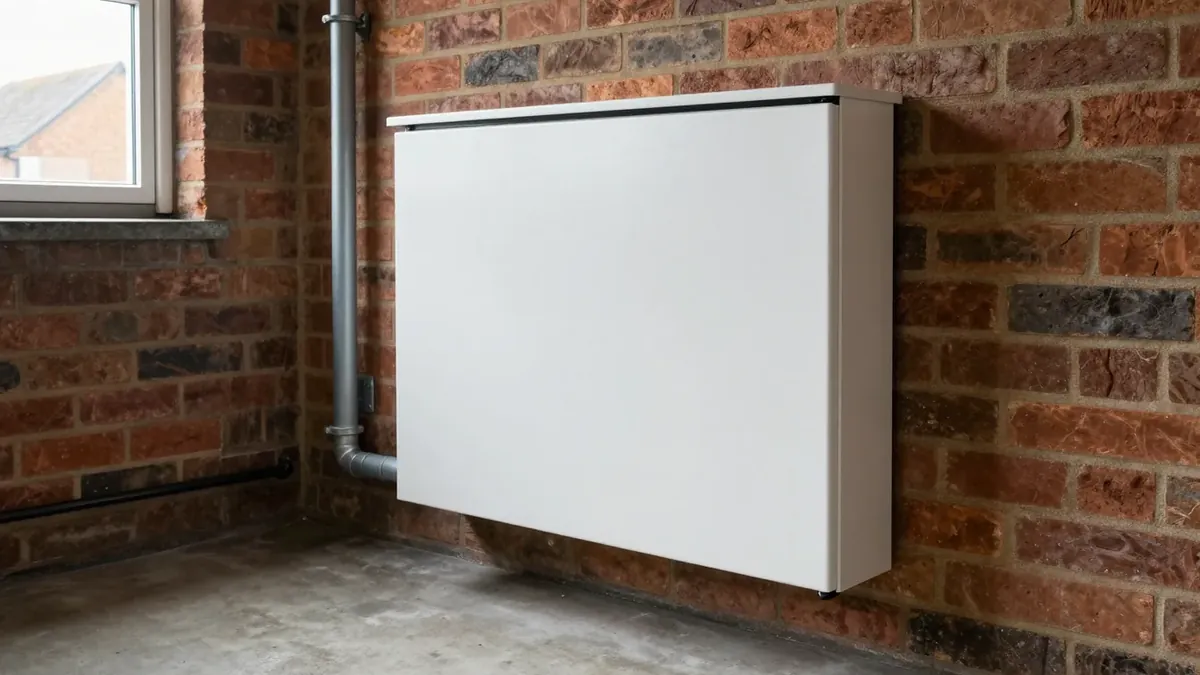
Yes, you can add a battery to existing solar panels in most homes. The battery connects either on the AC side, with its own inverter, or on the DC side, through a hybrid inverter. Which route suits you depends on your current inverter, its age and your paperwork. Therefore, check those first.
The two ways to retrofit a battery
Solar panels make direct current (DC). Your inverter turns it into alternating current (AC) for the house. However, a battery can join this chain at two points, and that choice shapes the whole job.
An AC-coupled battery has its own inverter and sits on the AC side of your wiring. Your existing solar inverter stays where it is. This is the usual retrofit route, because the panels and their inverter are left alone.
A DC-coupled battery takes power straight from the panels before it becomes AC. It needs a hybrid inverter that handles both the panels and the battery, so the old inverter goes. So the job is bigger. Unlike the AC route, it replaces your old inverter.
| AC-coupled | DC-coupled | |
|---|---|---|
| Existing inverter | Stays | Replaced by a hybrid |
| Typical fit | Retrofit to working solar | New system, or an old inverter due for replacement |
| Conversion steps | More | Fewer |
| Disruption | Lower | Higher |
When you need a new inverter
You do not always need one. If your inverter works and the installer is happy to wire an AC battery beside it, it can stay. Many retrofits go this way because it keeps the cost and the disruption down.
However, an older inverter deserves a hard look. If it is close to the end of its life, a hybrid fitted now can save a second visit later. Inverters age at different rates, so ask your installer how yours is doing.
A DC-coupled battery also suits a house with a small array and a poor old inverter. Since the new hybrid does two jobs at once, the sums can favour it. So ask for a written comparison of both routes, with the costs side by side.
How big should the battery be?
Size the battery around your evening use, not around the panels. Look at how much power the house draws between sunset and bedtime. A battery much larger than that will rarely fill, because your array cannot refill it in winter.
Your existing array sets the ceiling. A small array makes a large battery pointless, since there is little surplus to store. For example, a house with a modest roof and a high daytime load may have almost nothing left over to save.
Our guide to choosing a battery size shows the method step by step. Your installer should also check your smart meter data, because it shows your real daily use. Either way, ask for the usable capacity, not only the headline figure.
What to check on your MCS paperwork
Find your original paperwork before you call anyone, since it saves time later. The key page is the MCS certificate, which names the installer, the panels and the inverter. MCS is the UK quality mark for installers and products, and you need it to claim Smart Export Guarantee payments. Our guide to what MCS certification means for solar explains the detail.
Look for four things on your documents.
- The installer’s name and whether they still trade.
- The inverter make and model, so a new installer can check compatibility.
- The date of installation and the grid connection paperwork.
- Your Smart Export Guarantee supplier, if you have one.
Batteries have their own MCS standard, MIS 3012, which sits alongside the solar standard. As a result, you should pick an installer certified for battery work, not only for panels. Our page on MCS-certified installations explains what to ask.
Export payments and your tariff
Under the Smart Export Guarantee, energy suppliers pay you for surplus solar power sent to the grid. A battery changes this picture because it stores surplus power. You export less and use more at home.
That is not a problem in itself. However, you should tell your SEG supplier about the new battery and check their terms. Our guide to the Smart Export Guarantee with a battery covers how the payments work.
Tariffs matter more once you have storage. Some time-of-use tariffs charge far less overnight. Intelligent Octopus Go, for example, listed a cheap rate of 7.6p per kWh in October 2026 for eligible EVs and chargers. Our service page on smart tariff optimisation explains how a battery can use cheap and dear periods.
Cost, VAT and whether it pays back
A retrofit battery typically costs a few thousand pounds, depending on size and the route you choose. Quotes vary a lot, so get more than one. We do not quote a payback period, because it depends on your usage, tariff and system.
However, there is one clear saving. Home batteries, including those added to existing solar, are VAT-free (0%) until 31 March 2027. From 1 April 2027 the rate is due to revert to 5% under current legislation, according to HMRC Notice 708/6.
Whether the money makes sense is a separate question. Our article on whether solar batteries are worth it sets out the method for your home. Meanwhile, our guide to the best solar batteries in the UK shows how the main products compare.
Safety, siting and building rules
Batteries should follow PAS 63100, the BSI specification for fire safety when siting home energy storage. Outdoors or in a garage is the preferred place where practicable, while bedrooms and escape routes are not suitable. Your installer should explain where yours will go and why.
Electrical work in a home must meet building regulations, so paperwork matters. A registered installer normally does the paperwork and gives you the certificates. Their duties also include notifying or applying to your network operator, as the rules require. Scotland uses building warrants, so the paperwork differs there.
What the installer visit involves
Expect a survey before the quote is final, because each home differs. The installer will inspect your inverter, your consumer unit and the cable route. They will also look at where the battery can go and how far it sits from the meter.
Although each home differs, a quote should list the same core items. It should name the battery and its usable capacity, the coupling route and any inverter work. Furthermore, it should state who handles the grid paperwork and the warranty terms.
Retrofit questions in four cities
Local housing shapes where a battery can go. In Cardiff, for example, terraced homes make up 29.6% of households and semi-detached homes 29.7%, according to the 2021 Census. A terrace often has limited side access, which affects where an outdoor unit can sit. Our page for battery installers in Cardiff explains how matching works.
Sheffield is mostly semi-detached homes, at 38.0% of households. Therefore these usually have a side passage or garage, which gives an installer more choice. Owners who want retrofit battery quotes in Sheffield can use our free form.
Manchester has only 5.4% detached homes and 34.6% flats. As a result, for flat owners, the building and the lease may decide what is possible. See our page on solar battery installers in Manchester for local detail.
Bristol is 35.2% flats and 32.1% terraced, so shared roofs are common. Moreover, many homes also sit in one of the city’s 33 conservation areas. Our guide to battery storage installers in Bristol covers what to check first.
Choosing who does the job
Get at least two written quotes. Furthermore, ask whether the deposit and the workmanship warranty are insurance-backed. RECC members follow a code that says deposits should be no more than 25% of the contract price.
Be careful if your panels came through a leased or “free” arrangement. Check who owns the system before you add anything to it, since ownership affects what you may change. Our guide to free solar panels explains the common catches.
Solar Base Energy is a free matching service. We match you with an MCS-certified installer after you send one short form, so you compare quotes without chasing firms. You can read more on our battery storage service page.
Sources
Frequently asked questions
Can I add a battery to solar panels I already have? +
In most homes you can. The battery either connects on the AC side with its own inverter, or replaces your old inverter with a hybrid unit. An installer needs to check your current inverter and wiring first.
Do I need to replace my solar inverter to add a battery? +
Not always. An AC-coupled battery works alongside your existing inverter, so it can stay. A DC-coupled battery needs a hybrid inverter, which means replacing the old one.
Will adding a battery affect my Smart Export Guarantee payments? +
It may change how much you export, because the battery now stores surplus power. Your SEG supplier needs a certified system and an export meter, so tell them about the change and check their terms.
Is a retrofit battery VAT-free? +
Under current rules, home batteries fitted on their own or added to existing solar qualify for 0% VAT until 31 March 2027. From 1 April 2027 the rate is due to revert to 5%.