Smart Export Guarantee With a Home Battery
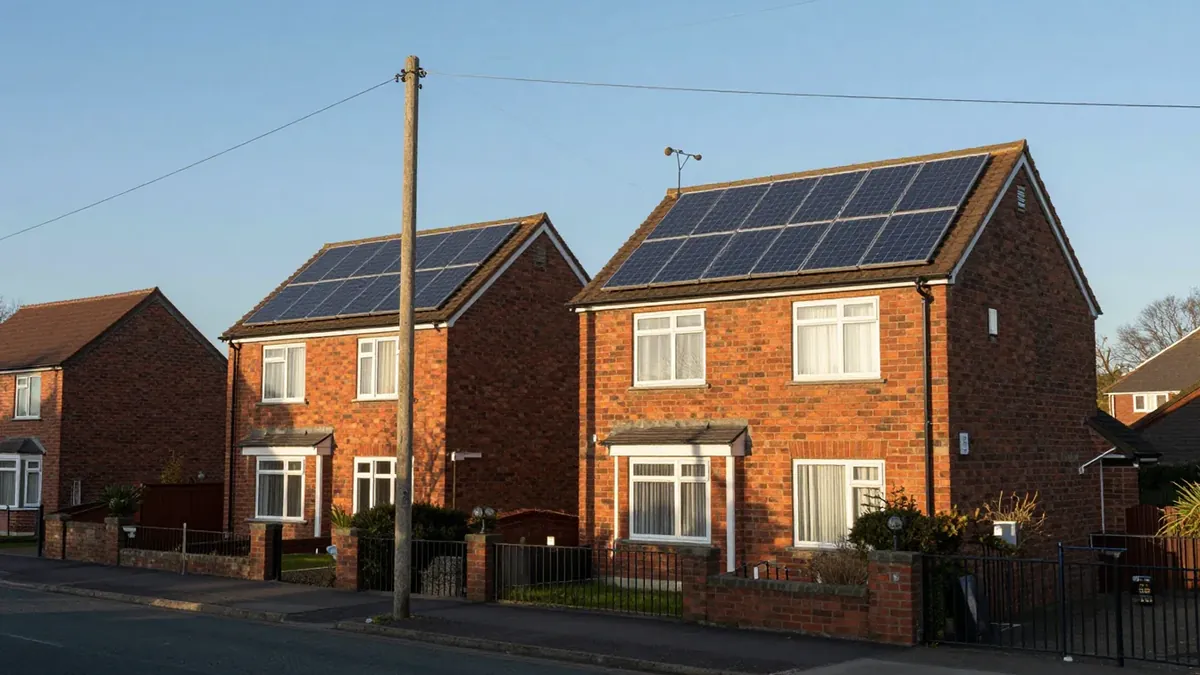
A home battery lets you choose when surplus solar power leaves your house. Under the Smart Export Guarantee, suppliers pay for solar electricity you send to the grid, although they set the rates. Your system must be MCS-certified, and you need a smart meter or similar export meter.
What the Smart Export Guarantee pays for
The Smart Export Guarantee, or SEG, requires licensed suppliers to pay you for surplus electricity from your solar panels. Ofgem runs the scheme. Specifically, obliged suppliers must offer at least one SEG tariff, and the rate must always be above zero.
Each supplier sets its own rate, tariff type and tariff length. As a result, two homes with identical panels can earn very different amounts. The supplier pays on export meter readings, not on how much your panels generate.
The scheme covers solar PV, and also wind, hydro and anaerobic digestion. For a typical home, however, solar is the only source that matters. Our guide to smart tariff optimisation covers how export fits with the rest of your energy deal.
What a battery changes
Without a battery, your panels first power the house. Whatever the house does not use goes to the grid, whether or not you want to sell it. Midday output is high while daytime demand is often low, so that surplus can be large.
With a battery, the surplus first charges the battery. Only when the battery is full does power flow to the grid. Therefore you export less, but you use more of your own solar electricity in the evening.
This is the key trade-off. Each unit you store is a unit you do not export. However, a stored unit offsets electricity you would otherwise buy, and the price cap makes that comparison easy to check.
Exporting versus storing: a worked method
Ofgem’s price cap from 1 October to 31 December 2026 averages about 26p per kWh for electricity. The standing charge is about 55p a day. The cap resets each quarter, and your own rate will differ by region and payment method. Use your bill for the exact figure.
Rates for exports vary a lot. In October 2026, for example, Octopus Energy’s open SEG tariff paid 4.1p per kWh. British Gas paid 3p per kWh on its tariff for non-customers. Some suppliers pay more to their own import customers, so check current terms before you decide.
Now compare. If you store a unit and use it later, you avoid buying it at your import rate. If you export it, you receive your SEG rate. In most cases the first is worth more, since import rates sit well above basic export rates.
The gap is the reason many owners add a battery. Specifically, a stored unit can be worth several times what an export unit earns, although your own tariffs decide the real ratio.
That does not mean you should store everything. A battery fills up, and extra solar in summer has to go somewhere. For this reason, a good SEG tariff still adds value for the surplus that a full battery cannot take.
The rules you must meet
Your installation needs MCS certification, or an equivalent scheme such as Flexi-Orb. Since MCS is the UK quality mark for installers and products, many incentives depend on it. Our MCS-certified installation pages explain what certification covers.
You also need a meter that can record half-hourly export readings. In most homes, therefore, that means a smart meter. The scheme covers Great Britain, so Northern Ireland homes are not included.
Finally, you cannot claim SEG on a system that is also on Feed-in Tariffs. Instead, you apply directly to the supplier offering the SEG tariff. If you are not sure that your system qualifies, ask your installer for the MCS certificate.
How to read SEG tariff terms
Tariff pages look simple, yet several terms change what you earn. Read each one before you apply. The list below covers the points that matter most.
- Rate type. A fixed tariff pays the same amount for its term. A variable or smart tariff changes with the time of day or the market.
- Length. Some tariffs run for a year or more, while others can change at short notice.
- Import link. A basic tariff does not need you to buy electricity from that supplier. Premium tariffs often do.
- Battery rules. Some export tariffs are built for homes with a battery and pay more at set times.
Because rates move, treat any figure you read, including those above, as a snapshot. Look at the supplier’s page on the day you decide. A rate that looked high in spring can look average by winter.
Time-of-use tariffs and batteries
A battery also lets you use cheap-rate import tariffs. For example, smart tariffs such as Intelligent Octopus Go charge a much lower rate overnight, at 7.6p per kWh in October 2026. These tariffs need an eligible EV or supported smart charger, so check the supplier’s page.
In that case the battery can charge cheaply overnight and cover the evening peak. It can also hold solar power for later, instead of selling it for a few pence. Our guide to solar and battery packages shows how the parts are usually bundled.
Not every battery suits every tariff. For example, a model with limited inverter power may not move energy as fast as a tariff window demands. If you plan to use a smart tariff, mention it in your quote request. Our battery storage service page lists what to ask.
What a battery costs and whether it pays back
Export income is only part of the case for a battery. The main gain is usually the avoided import cost. The battery itself typically costs a few thousand pounds, depending on size, brand and installer.
To judge the value, you need three numbers: the solar you waste, your price per unit, and the quote. Our solar battery cost guide walks through the price factors. For the sums, read about the solar panel payback period.
Larger systems add cost but may add resilience too. For instance, if you want power during an outage, read the guide to off-grid solar battery backup. Backup is a separate feature from export, so it should appear separately in a quote. A premium unit such as the one in our Tesla Powerwall 3 guide shows how makers package these extras.
Export potential in four cities
Export income depends on how much your panels generate. Therefore location matters. The European Commission’s PVGIS tool models a 4 kWp array at about 3,788 kWh a year in Leeds. For Bradford the figure is about 3,739 kWh, for Derby about 3,897 kWh, and for Hull about 3,988 kWh.
Housing also matters, because it shapes the roof you have. In the 2021 Census, 24.1% of Derby households lived in detached homes and 39.1% in semi-detached homes. Hull has the opposite pattern, with 46.7% terraced. Terraced roofs are often smaller, so a modest array and a well-sized battery may suit better.
If you live in one of these cities, start with a local page. For example, our pages on solar battery installers in Leeds and battery storage across the Bradford district cover local details. Likewise, read about solar panels and batteries in Hull or installers serving Derby.
Getting a system that qualifies
Before you sign, check four things. The installer should be MCS-certified, and the quote should include a smart meter plan if you lack one. The system should also be registered for SEG, and you should ask who handles the paperwork.
Next, ask the installer to show how the battery will affect exports. A good installer can model the likely split between self-use and export. Moreover, they should be clear that rates and tariffs belong to your supplier, not to them.
Solar Base Energy is a free matching service. We match you with an MCS-certified installer, because certification is the first thing to settle. Use the quote form to describe your home, your panels and any tariff you are considering.
Sources
Frequently asked questions
Do I need MCS to get paid under the Smart Export Guarantee? +
Yes. Your installation must be certified under MCS or an equivalent scheme, and you need a meter that records half-hourly export readings. A smart meter normally meets that need.
Can I sell electricity back to the grid with a battery? +
Yes, if your solar panels qualify for the Smart Export Guarantee. The scheme pays for surplus electricity from solar PV that reaches the grid, so a battery changes how much you export and when.
Do I have to switch my import tariff to claim SEG payments? +
Not for a basic SEG tariff, which you can take from a supplier without moving your import supply. Some premium export tariffs do require you to buy your electricity from the same supplier.
Can I claim SEG and Feed-in Tariff payments together? +
No. You cannot receive the Smart Export Guarantee on a system that is already on the Feed-in Tariff scheme. Check your paperwork if you bought a home with solar panels already fitted.