Best Solar Batteries UK: What to Compare
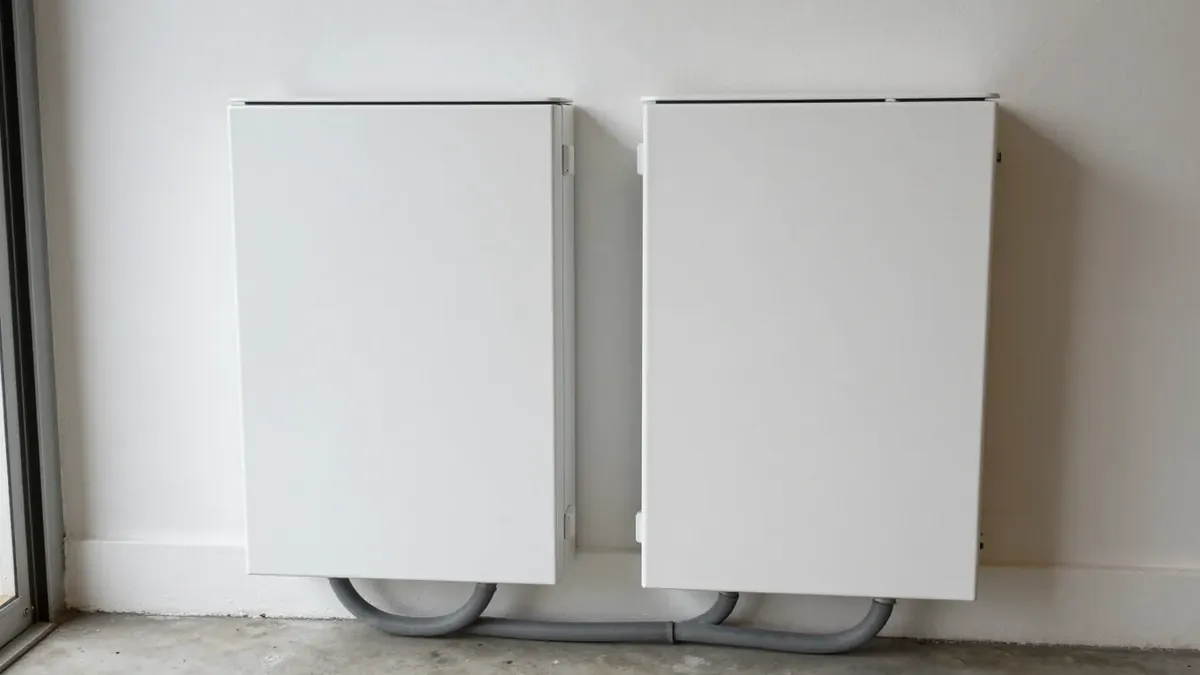
The best solar battery UK homeowners can buy is the one that fits your own evening use, your panels and your inverter. Headline capacity matters less than usable kWh, power output and warranty terms. Therefore, compare those points on each quote, and the right model usually becomes clear.
Why there is no single best solar battery
Rankings of the best solar batteries rarely compare like with like. A battery that suits a family at home all day may be wrong for a couple who are out until six. Because homes differ, the useful question is which model fits yours.
Prices and models also change quickly. For that reason this guide gives you criteria to check rather than a league table that would date within months. Additionally, it shows what to ask so you can judge any quote yourself.
Usable capacity, not the headline number
Capacity is measured in kilowatt-hours (kWh). However, the figure on the box is not always what you can draw out. Makers keep some charge in reserve to protect the cells, so usable capacity can be lower.
Ask each installer for the usable kWh in writing. Then compare quotes on that number. For example, a battery sold as 10 kWh with 9 kWh usable behaves like a 9 kWh unit in your home.
If you are unsure how much you need, read our guide on what size solar battery you need. Since it starts from your evening use, the answer fits your own home.
Power rating: how fast it can supply your home
Power is measured in kilowatts (kW). It tells you how much the battery can supply at once. A kettle, an oven and a heat pump may all draw power together in the evening.
A battery with a low power rating may cover only part of that load. As a result, the grid fills the gap and your savings shrink. Check the continuous power figure, not only the peak.
Round-trip efficiency
Some energy is lost each time you charge and discharge a battery. Round-trip efficiency shows what share of the stored energy comes back out. Higher is better, although it is one factor among several.
Here is a worked example. Suppose a battery returns 90% of what you put in. Then 10 kWh of spare solar gives you 9 kWh of evening supply. The figure is illustrative, so use the maker’s published number and ask how they measured it.
Warranty and cycle life
A battery wears with use, so the warranty matters. Look for three things in the terms. First, the length in years. Second, the capacity the maker guarantees at the end.
Third, check for limits on cycles or energy throughput. Warranty norms differ between brands, so do not assume. Ask for the product warranty and the performance warranty in writing, and ask who handles a claim if the installer closes down.
Inverter fit: AC or DC coupled
A battery must work with your inverter. A DC-coupled battery sits behind a hybrid inverter that handles panels and storage together. In contrast, an AC-coupled battery has its own inverter, which means you can add it to an existing system.
Some batteries have the inverter built in, which can suit a new install. Meanwhile, an AC-coupled unit is often easier on a system you already own. Our guide to how home battery storage works explains both routes in plain terms.
Safety, siting and standards
Where the battery goes matters as much as which one you pick. PAS 63100 is a BSI specification for fire protection of home energy storage. It advises outdoor siting where practicable, and it keeps batteries out of bedrooms and escape routes.
MCS installers work to MIS 3012 for batteries. Your installer should explain where yours will sit and why. Our page on MCS-certified installations covers what the certificate means and how to check it.
Cost, VAT and value
We do not quote a battery price here because costs vary with size, brand and the home. Instead, compare the cost per usable kWh across at least three quotes. That figure strips out differences in headline size.
Home batteries are currently VAT-free (0%) until 31 March 2027, including ones fitted on their own. From 1 April 2027 the rate is due to revert to 5% under current legislation. Meanwhile, our guides on whether solar batteries are worth it and solar panel costs show how to test the value.
Battery on its own or in a package
You can buy a battery alone or with new panels. A bundle can simplify the paperwork, because one installer designs the whole system. Compare package quotes line by line, using our checklist for a solar and battery package.
If you want a combined quote, see our solar and battery bundles page. For a battery on its own, read about home battery storage installers. Either way, the same criteria apply.
Home type changes the shortlist
Your building affects the choice. In Birmingham, 35.6% of households live in semi-detached homes, according to the 2021 Census. Those homes often have room for a wall or garage unit. Therefore solar and battery installers in Birmingham will often quote similar models.
Flats change things. Glasgow City Council data from 2020 put about 73% of its homes in flats. If that is you, battery storage in Glasgow may depend on shared roof and cellar space.
Leeds is closer to the Birmingham pattern, with 37.5% of households in semi-detached homes. Ask about solar battery installers in Leeds if you have a pitched roof. In Bristol, 35.2% of households are in flats, so home battery options in Bristol often start with who owns the roof.
Backup power and smart tariffs
Many solar and battery systems switch off during a power cut. Backup is an extra feature, so ask your installer whether the system you are quoted includes it. If it matters to you, our page on off-grid and backup power explains the options.
Tariffs matter too. A battery can charge cheaply overnight on a time-of-use tariff. For example, Intelligent Octopus Go charged 7.6p per kWh overnight in October 2026.
However, rates change, and some tariffs need an eligible electric vehicle or charger. Check the supplier’s page before you rely on a figure. A tariff can also change which power rating makes sense for you. Therefore choose the tariff and the battery together, rather than one after the other.
Common mistakes when choosing
Buyers often pick on capacity alone. Yet a large battery that your panels never fill earns less than a smaller one that fills each day. Match the size to your solar output and your evening use.
Another mistake is ignoring the inverter. If your existing inverter is old, the better route may be a new hybrid unit. Similarly, some buyers skip the paperwork, although MCS certification is what unlocks Smart Export Guarantee payments.
Questions to put to every installer
Good installers welcome detailed questions. Specifically, ask which models they would fit and why. Ask what happens to your savings if your usage changes.
Also ask whether the app shows live generation, storage and export. Monitoring helps you spot faults early. Because it also shows how the battery behaves, it helps you judge value after a year.
How to compare quotes
Ask each installer to quote on the same terms, because uneven quotes hide the real differences. Then lay them side by side. Use the same checklist for each one, and write down any gaps before you decide.
| Check | What to ask |
|---|---|
| Usable capacity | Usable kWh, in writing |
| Power | Continuous kW, not only peak |
| Efficiency | Round-trip figure and how measured |
| Warranty | Years, guaranteed capacity, cycle limits |
| Inverter fit | AC or DC coupled, and why |
| Siting | Where it goes and how PAS 63100 is met |
| Certification | MCS number for the installer |
Tell us about your home through the free quote form. We match you with an MCS-certified installer, and there is no obligation to proceed.
Sources
Frequently asked questions
What is the best solar battery in the UK? +
No single battery wins for every home. The best one has the usable capacity you will cycle each day, a power rating that suits your evening loads, and an inverter that works with your panels. Ask matched installers to compare two or three models on those points.
Is a bigger battery always better? +
No. A battery that never fills from your panels sits part empty, so you pay for storage you do not use. Size it to your evening use and your solar output instead.
Do I need an MCS-certified installer for a battery? +
To claim Smart Export Guarantee payments, the solar system must be MCS-certified. MCS installers also follow the MIS 3012 standard for home batteries, so it is the safer route for a battery too.
What does usable capacity mean? +
Usable capacity is the energy you can actually draw out of the battery. It can be lower than the headline figure because makers keep some charge in reserve to protect the cells.